扫码观看回放视频
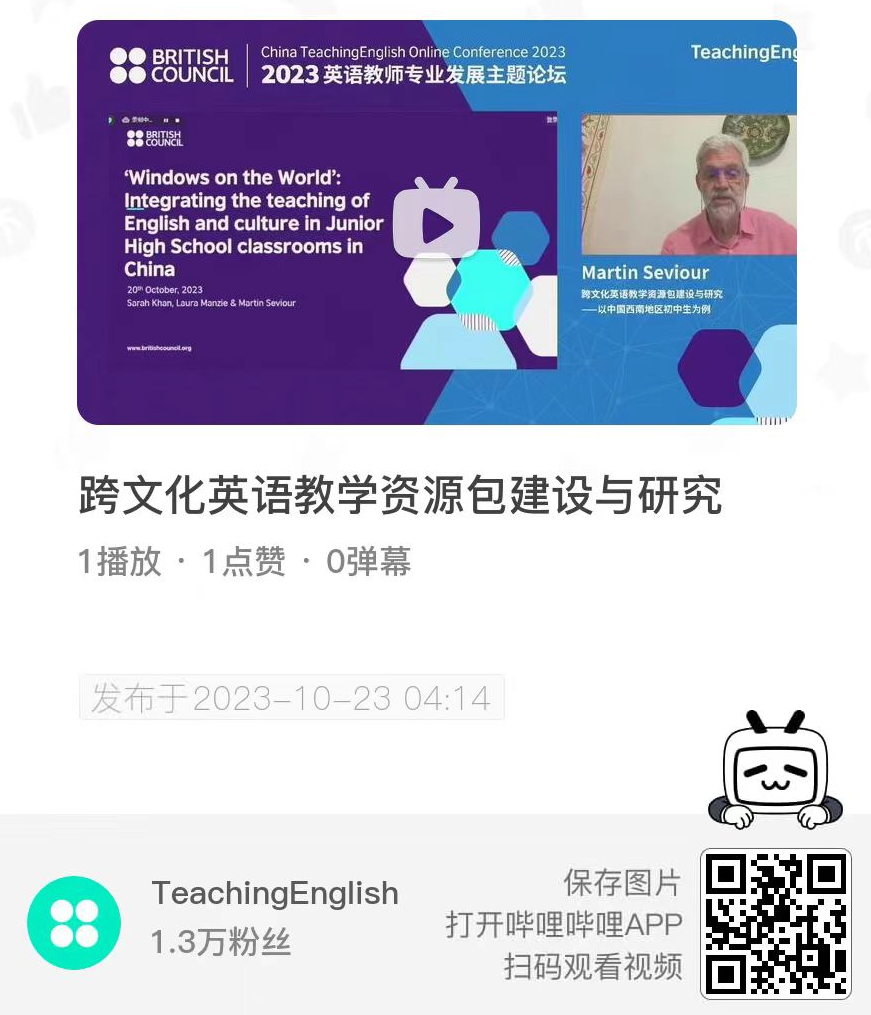
发言小结
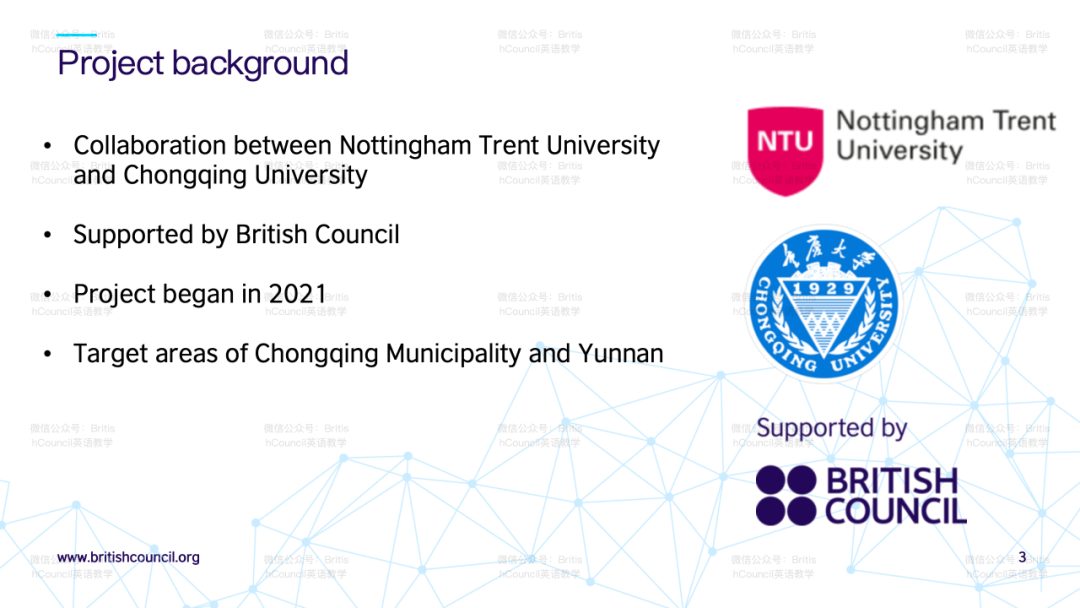
英国合作伙伴: 诺丁汉特伦特大学
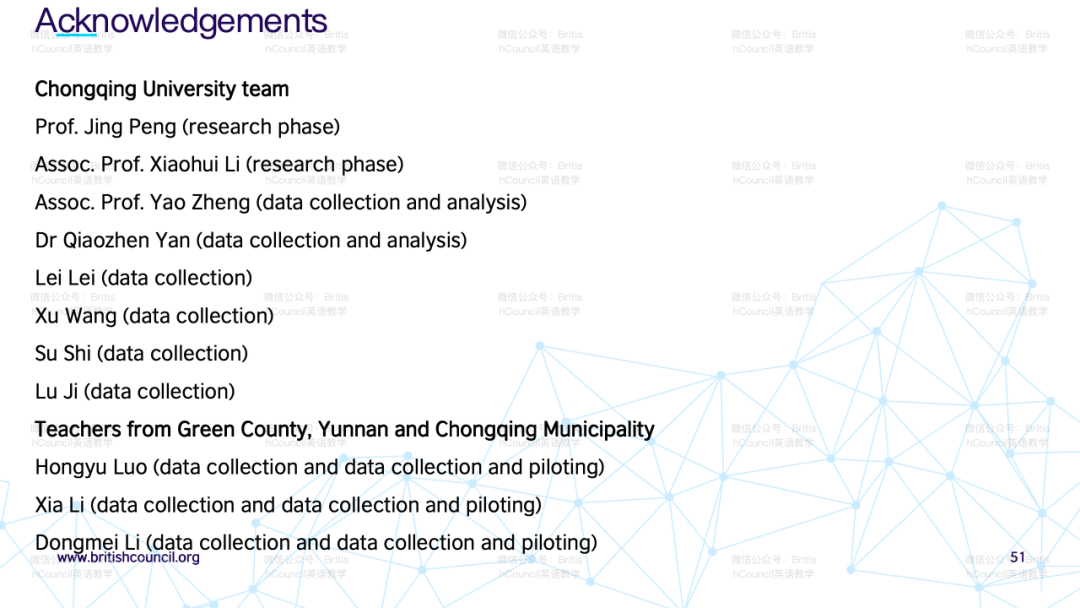
中国合作伙伴: 重庆大学
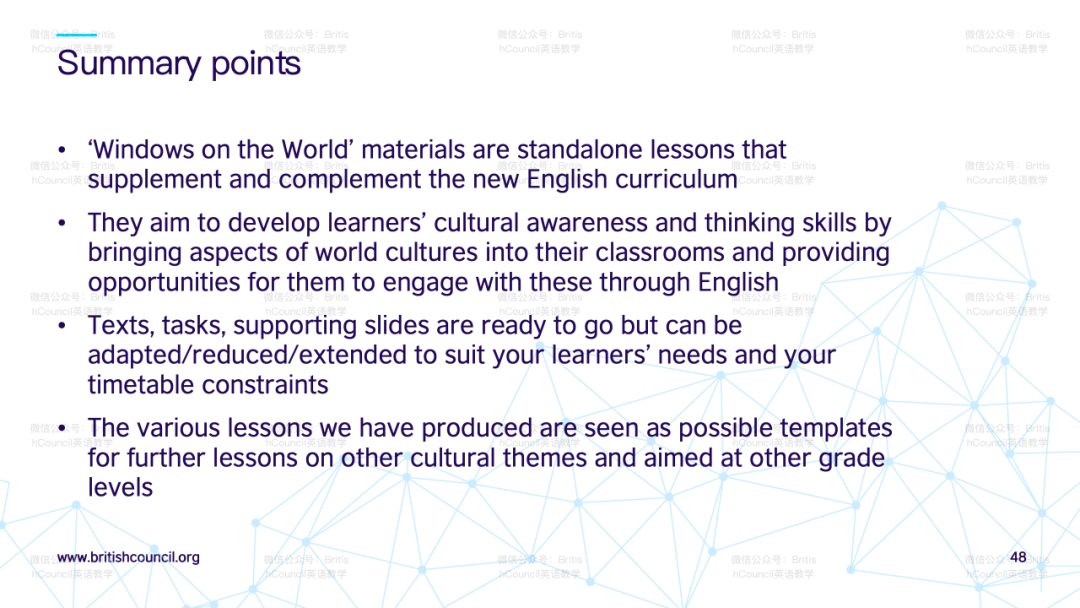
项目介绍:该项目将主要分析中国乡村和欠发达地区初中英语教师在培养学生跨文化沟通能力方面的课堂教学资源需求,了解学生英语学习动机及其对跨文化交流的理解现状,参考2022年版《中国义务教育英语课程标准》要求,开发一套在新课标指引下,符合当地实际、以跨文化交际为主题的数字化教学资源包,制定配套的教师教学能力培训计划,并在有需要的学校,特别是重庆大学对口帮扶的地区开展教师培训。该项目的实施将有助于拓展初中英语课程教学内涵,助力学生未来发展。
中英联合研究获奖项目3:跨文化教学资源包建设与研究
项目实施过程
该项目的实施分为两个阶段。第一阶段,通过教师和学生调查,了解他们对英语课中融入文化元素的态度。第二阶段,根据调查结果和中国合作方的建议,设计并试行适合中国农村西南地区学情的以文化为主题的教学材料。这些材料注重提高学生的语言技能、文化意识和思维能力,并符合2022年版《中国义务教育英语课程标准》的要求。该项目始于2021年,由英国文化教育协会支持,合作双方均具备丰富的英语教学法、教材开发和研究经验。
关键观点和文献回顾
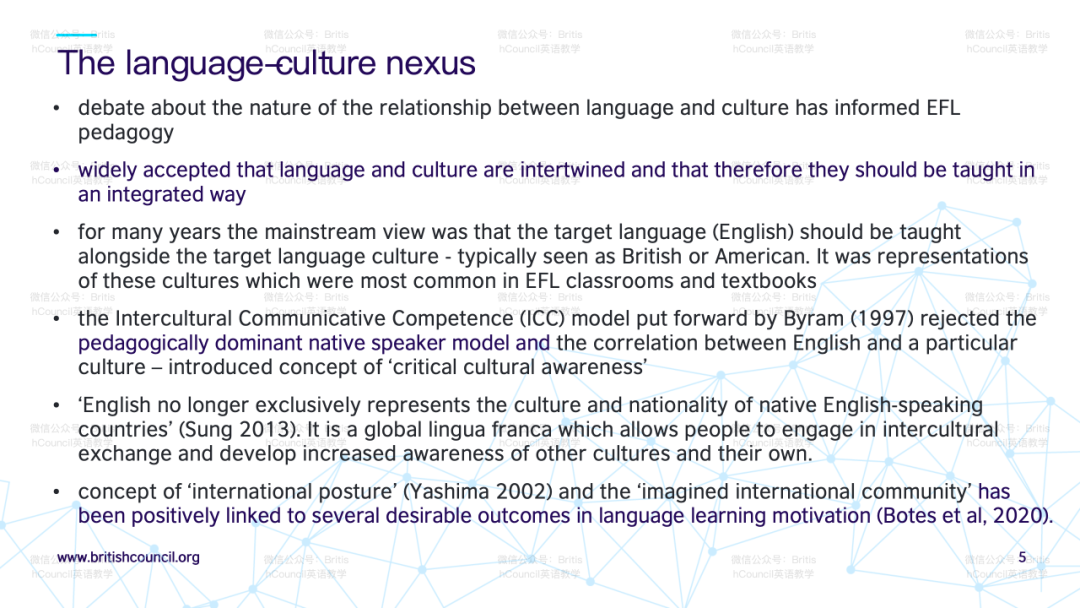
发言人提到了在英语教学中探讨跨文化的一些关键理念。在过去,英语教学的主流观点曾倾向于将英语与其主要文化(即英国和美国文化)一起教授。然而,Claire Kramsch等应用语言学学者在20世纪80年代和90年代对此提出了挑战。他们认为英语应该促进跨文化交流,而不是推广任何单一文化。相应地,Byram提出的“关键文化意识”理论鼓励英语学习者培养对全球共同体的理解,了解不同文化并进行比较。演讲者还提到了Yashima提出的“国际态度”概念,这一概念能够激励英语学习者。即使学习者很少直接接触不同文化,他们也可以构建一个想象中的全球共同体,这为他们提供了更广阔的跨文化视角和积极的语言学习态度。
新课标要求
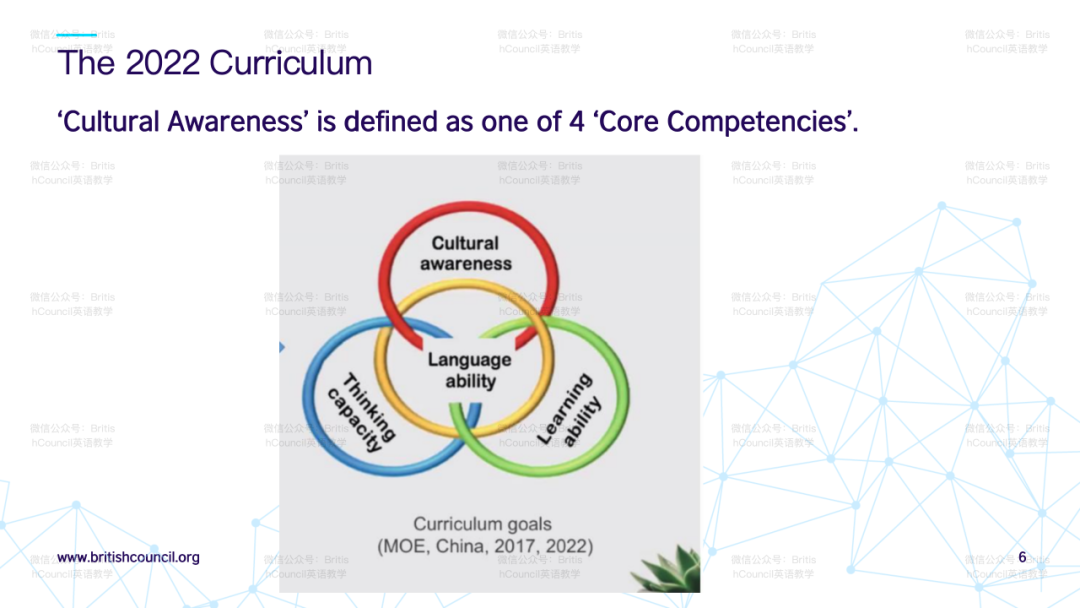
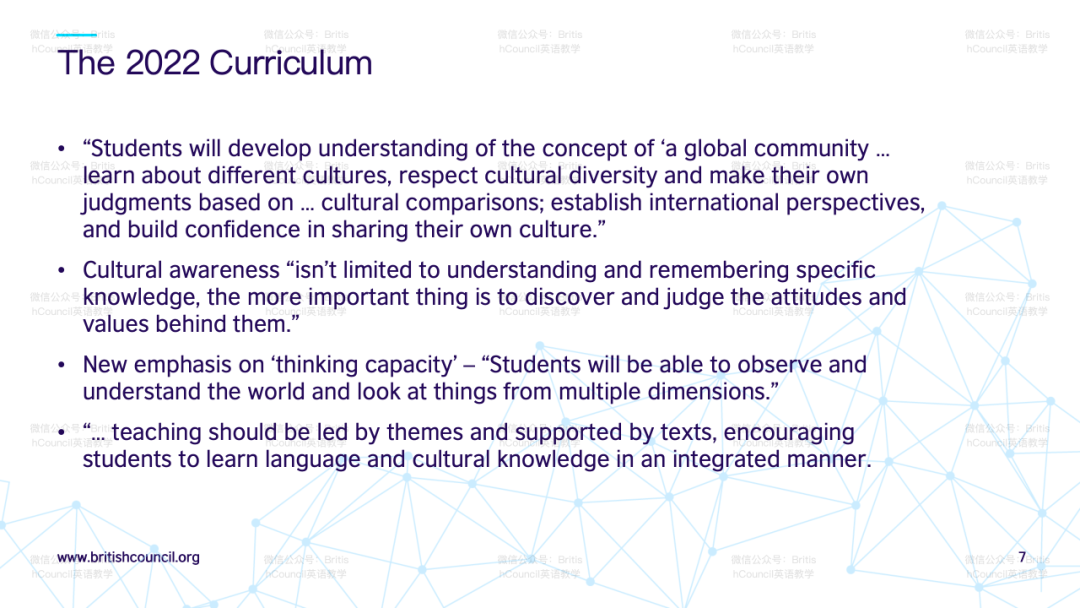
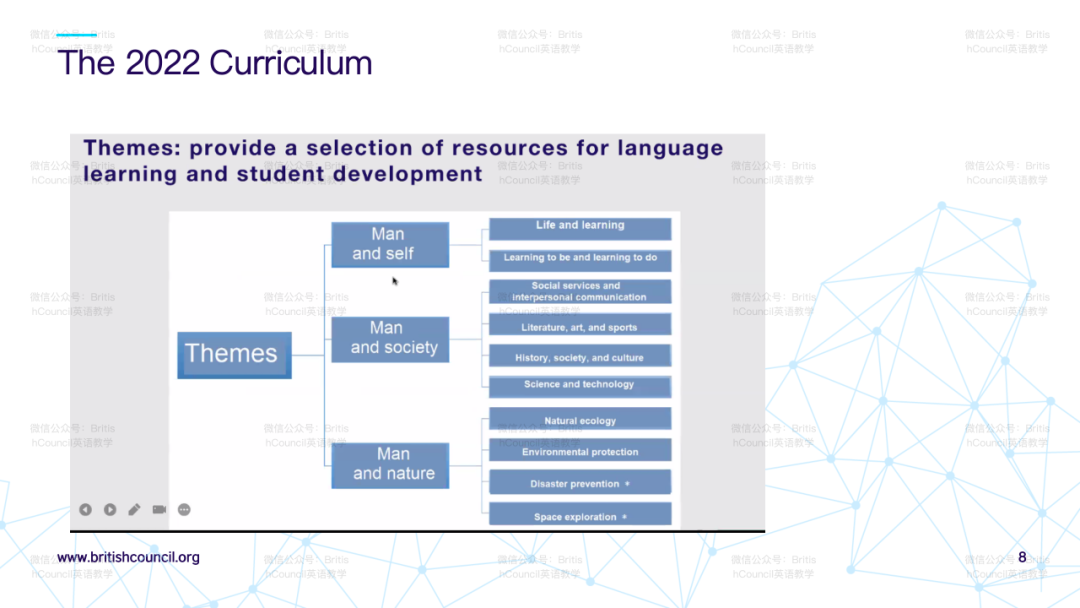
2022年版《中国义务教育英语课程标准》为项目团队提供了重要指导框架。其中将“文化意识”定义为英语学习的四项核心能力之一,强调其重要性与其他语言技能如词汇和语法相平等。它还强调了学生应该培养对全球共同体的理解,了解不同文化并进行比较,同时培养对文化多样性的尊重。此外,新课标建议通过社会、自然、科学等主题整合语言和文化学习,并倡导以融合的方式教授语言和文化知识。
教师和学生态度研究结果
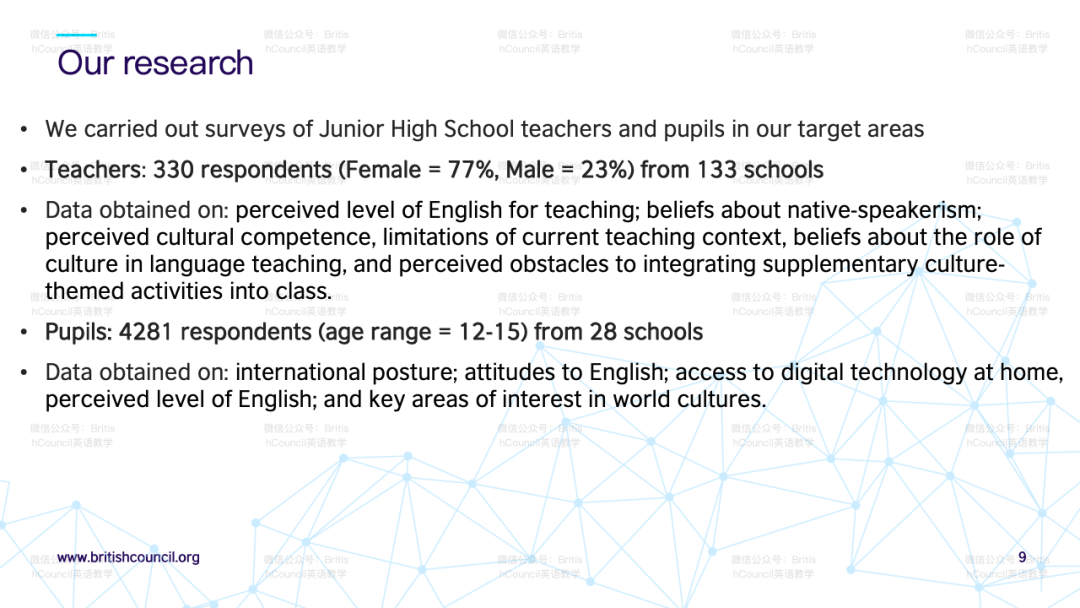
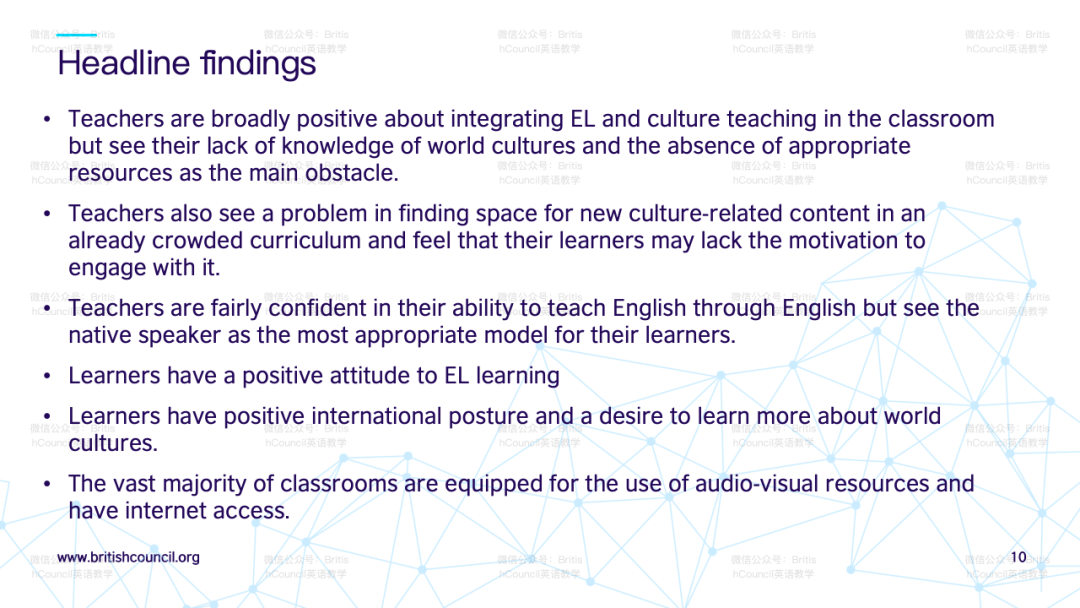
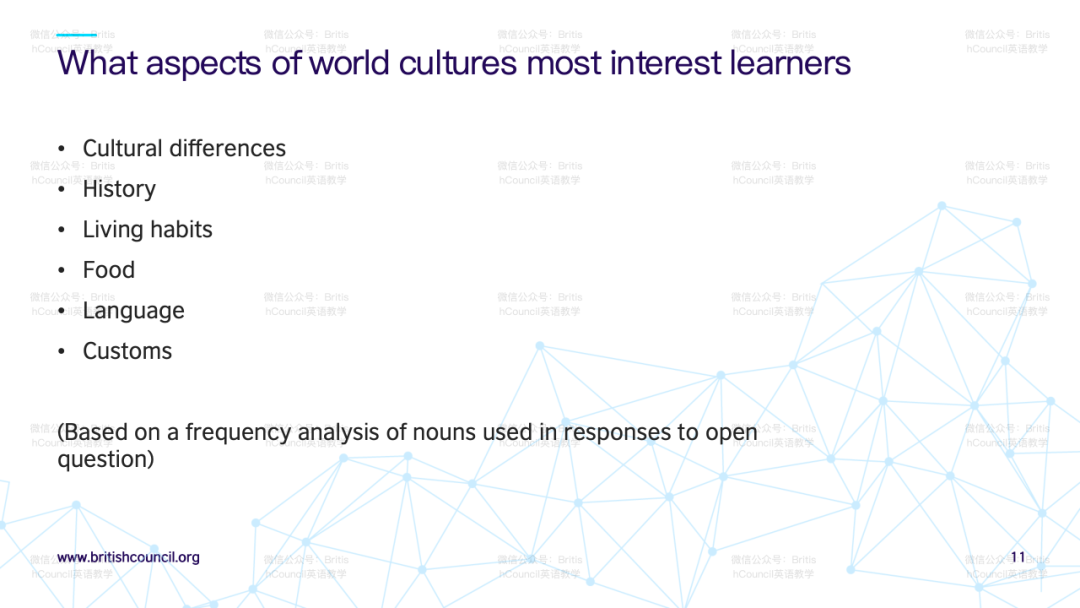
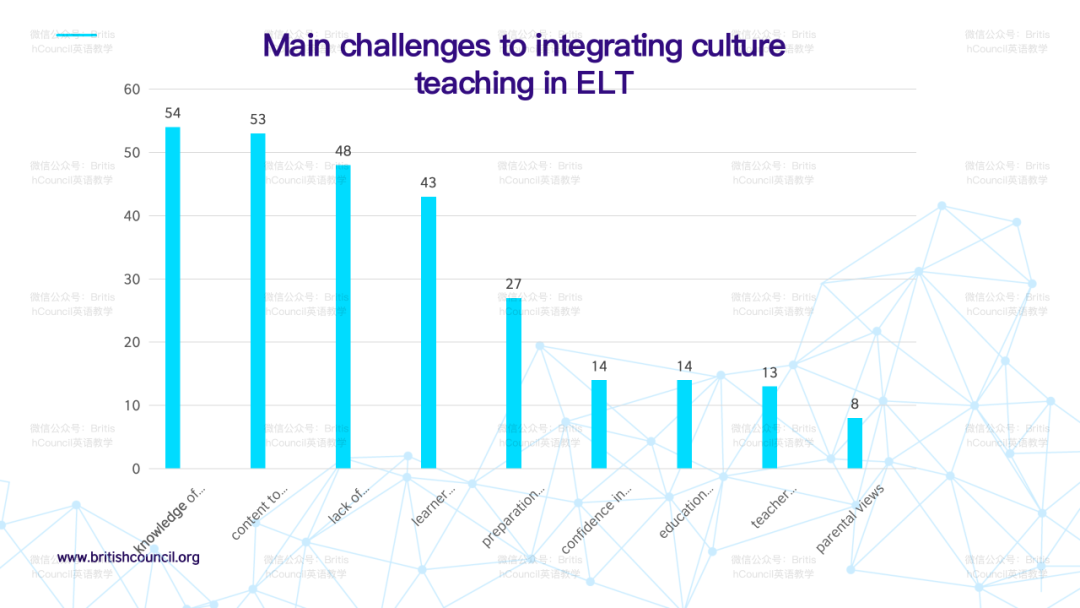
在调查中,教师表达了将文化元素融入英语课堂的积极态度,但感觉自己对全球文化的知识匮乏,并缺乏相关的教学资源和材料。此外,一些教师担心增加更多文化内容会影响学生的学习动机。然而,大多数教师认识到需要这种材料并表达了对此的强烈需求。从学生的调查反馈来看,他们对学习英语表现出积极的态度并表示对学习各种世界文化知识感兴趣。学生调查发现,大多数课堂都具备在课堂上使用视听材料的技术条件。学生确定的文化兴趣话题包括跨文化差异、历史、生活习惯、食物、风俗传统等。
适合学情的教学材料开发
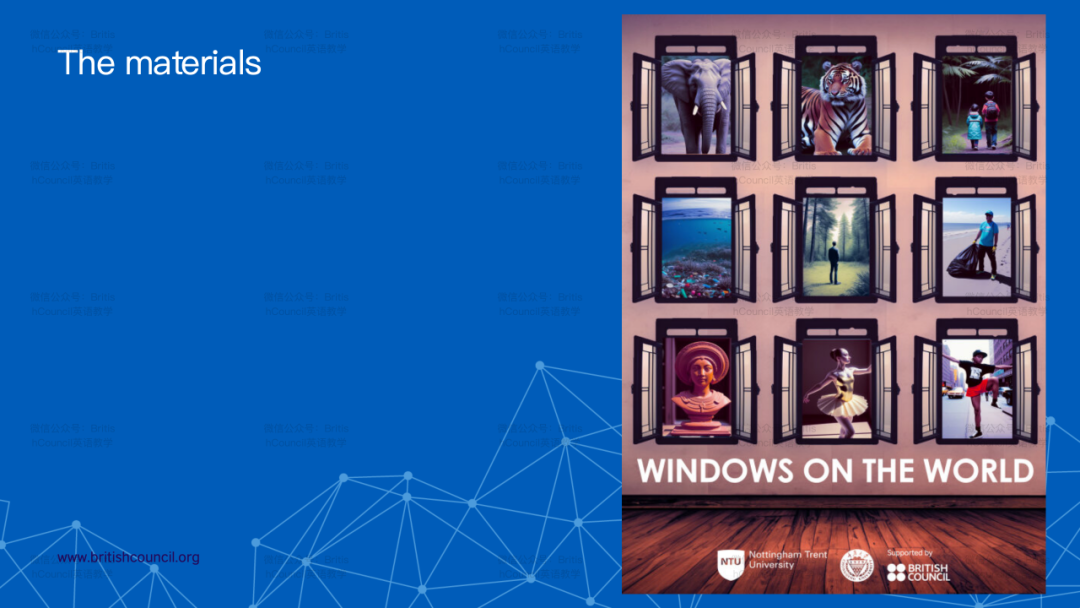
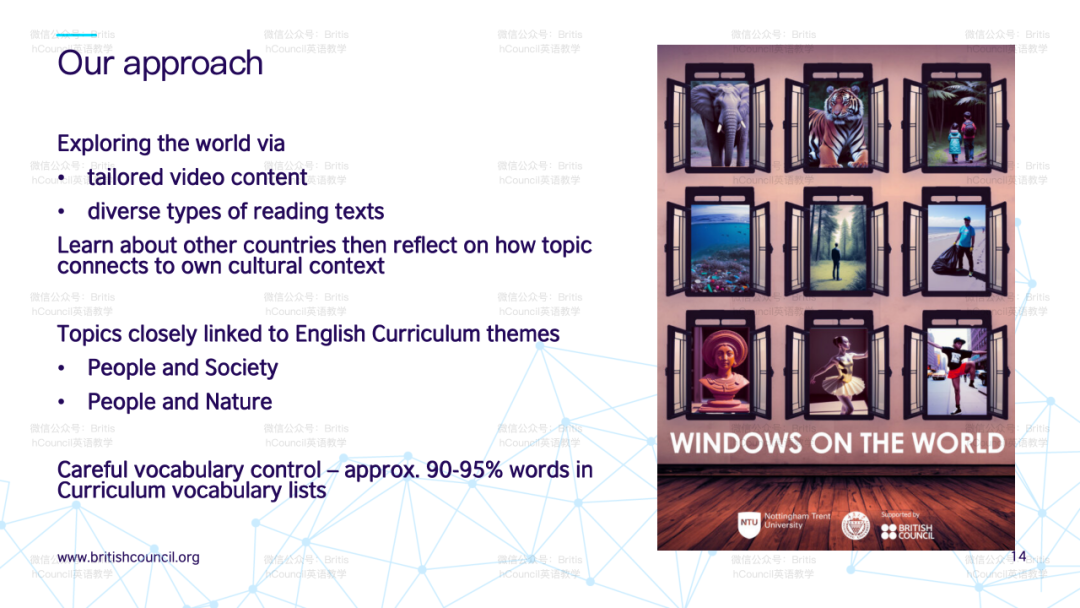
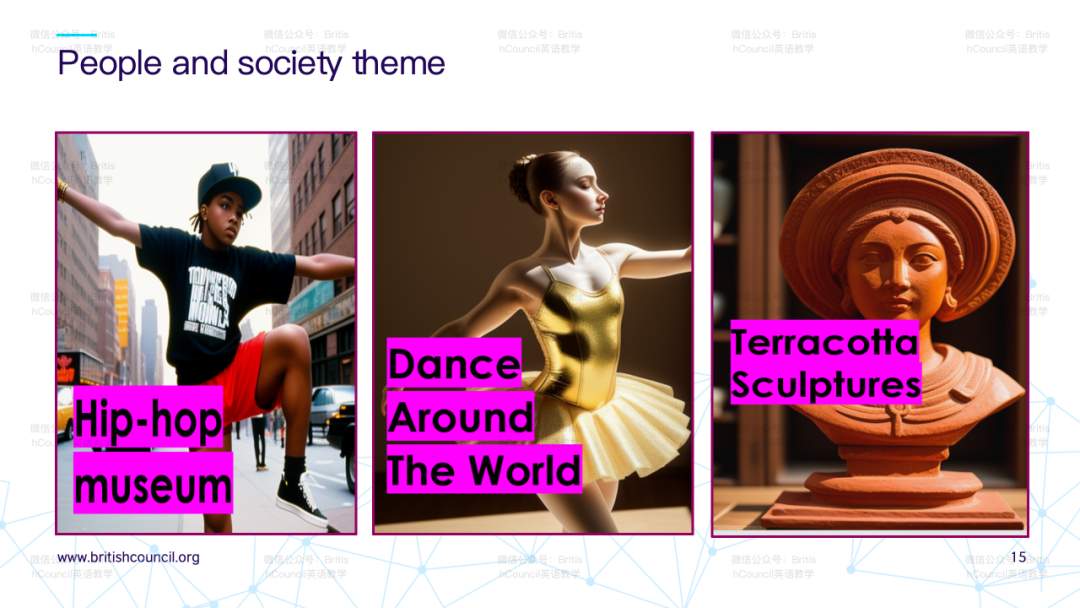
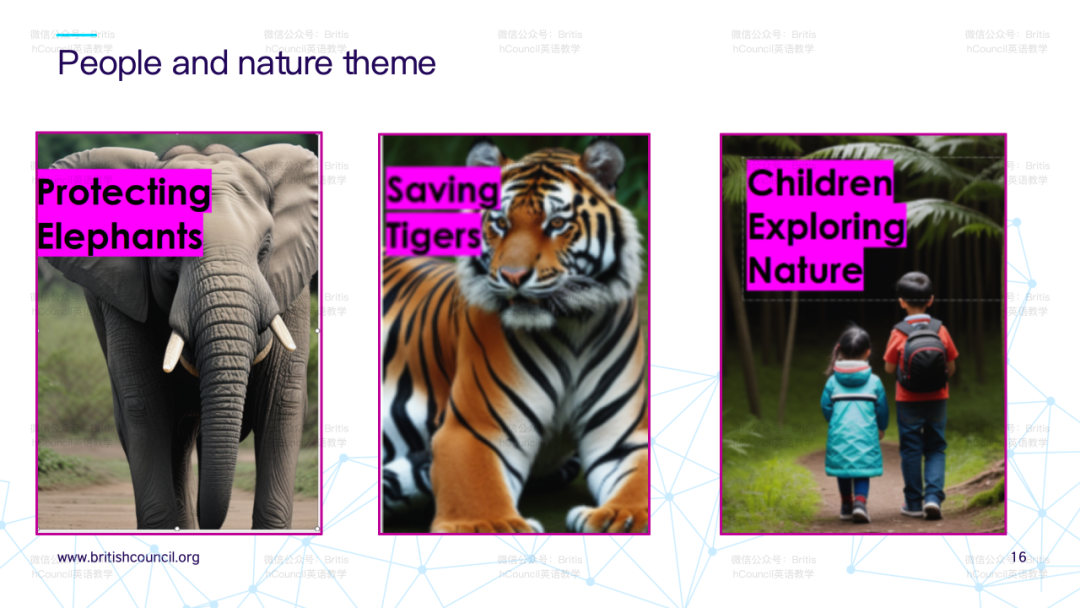
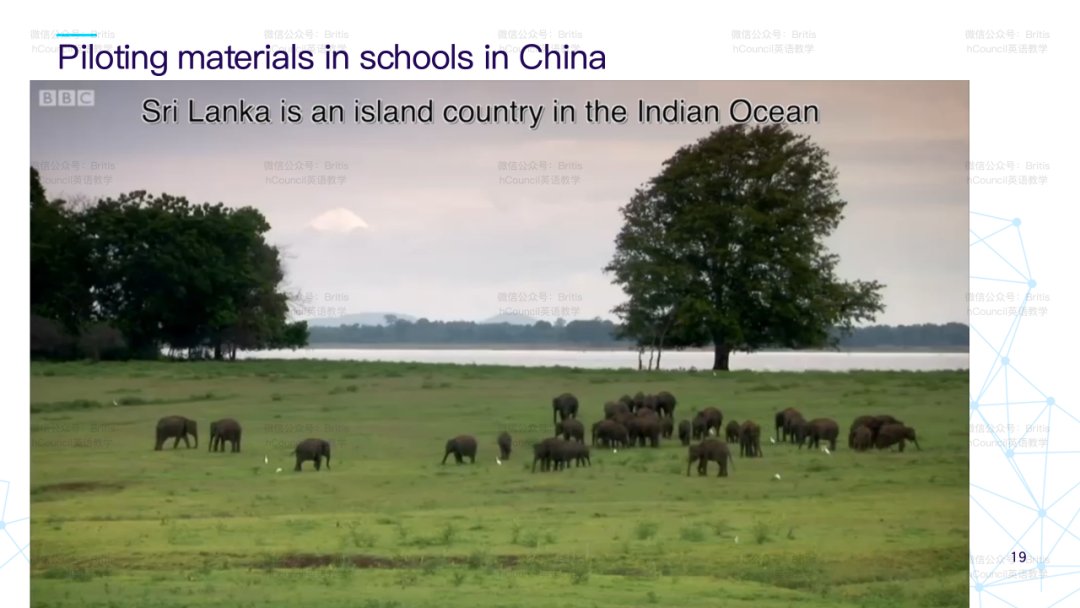
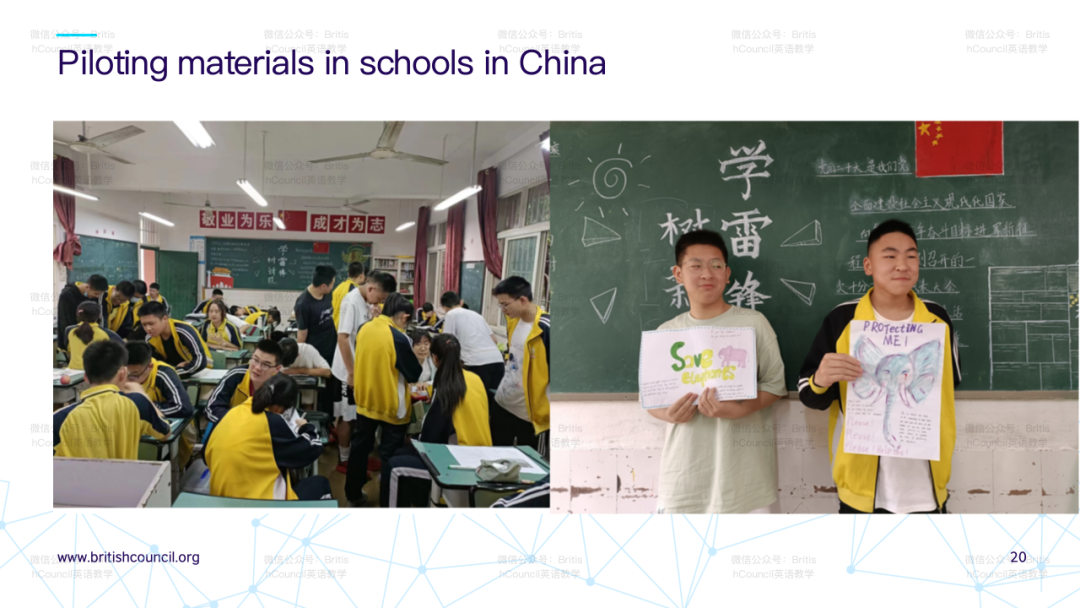
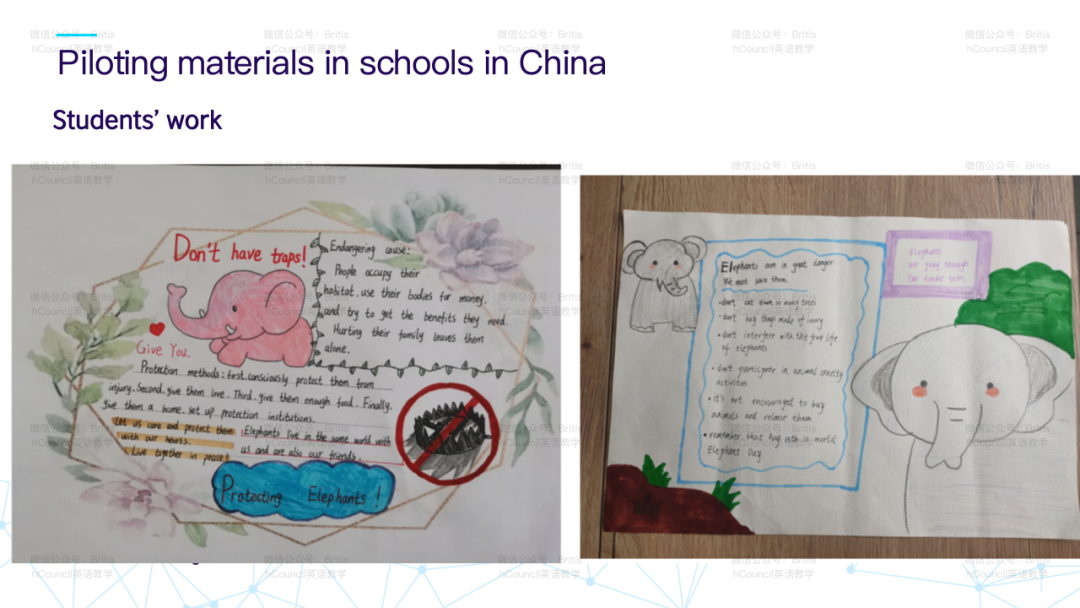
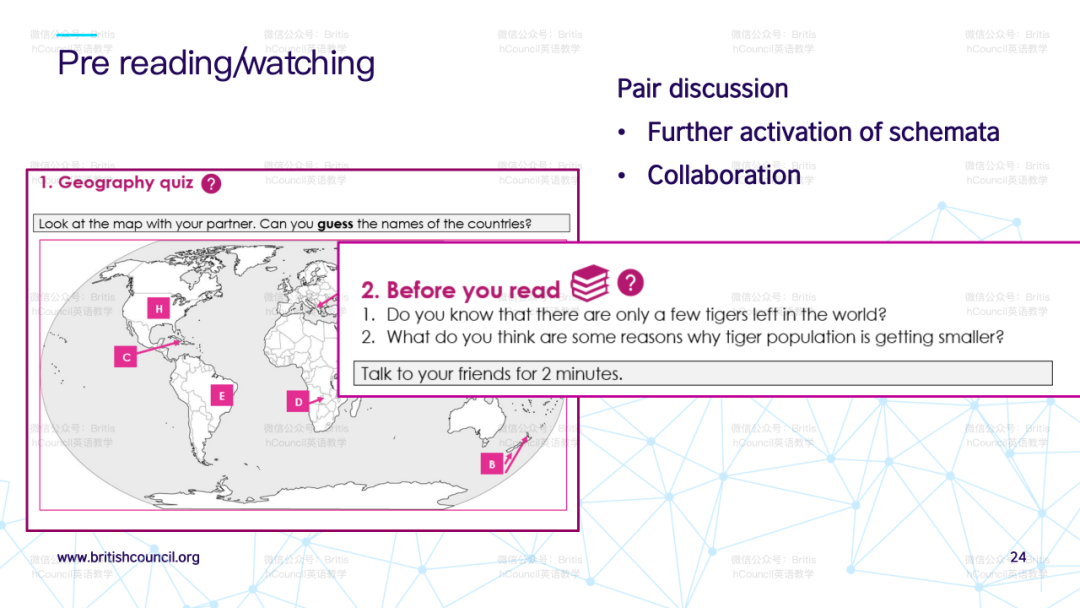
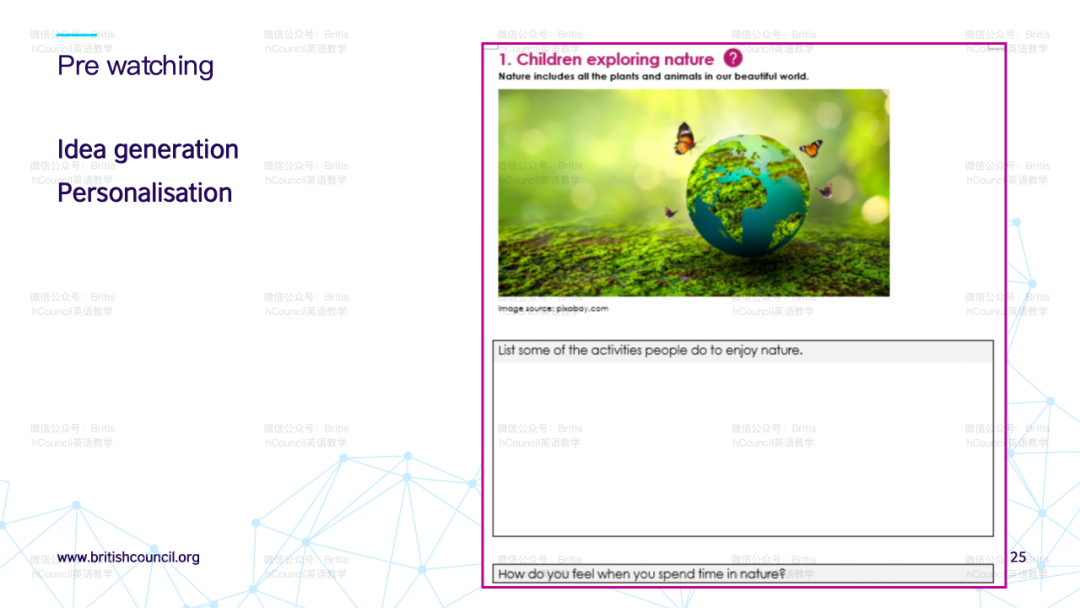
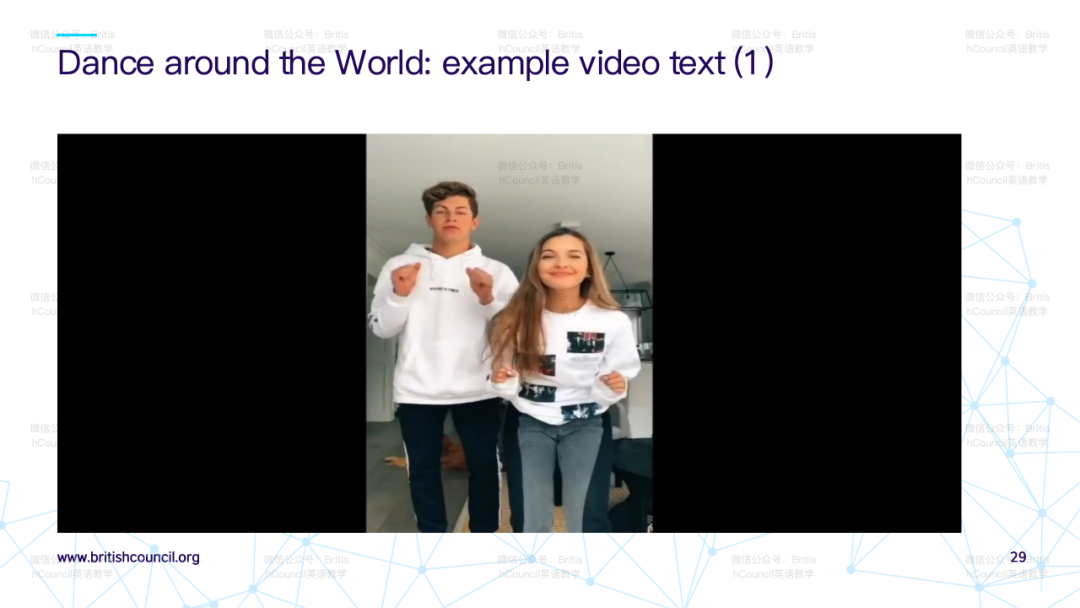
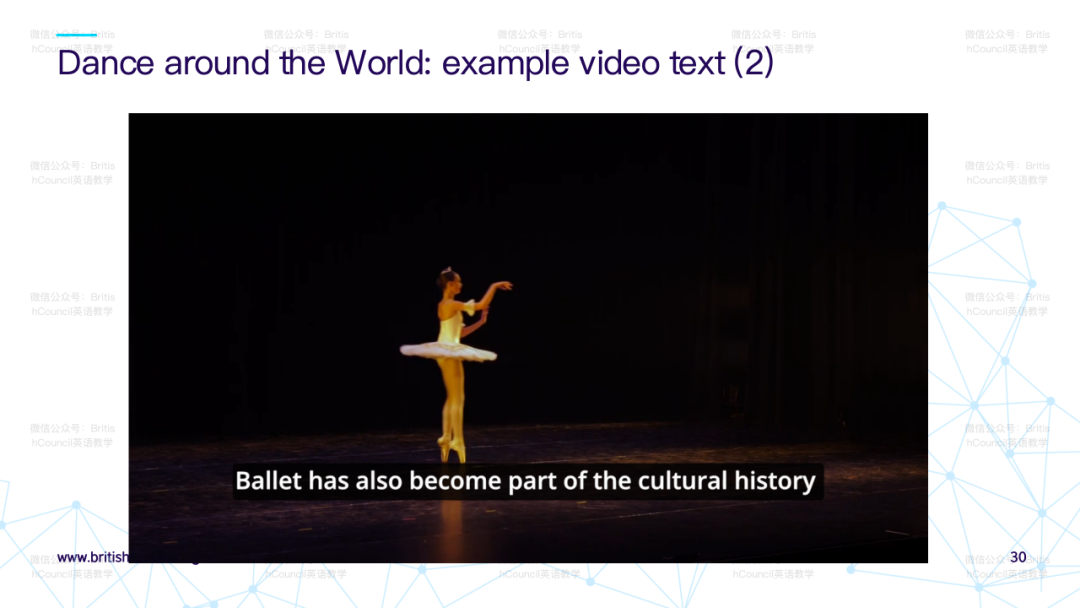
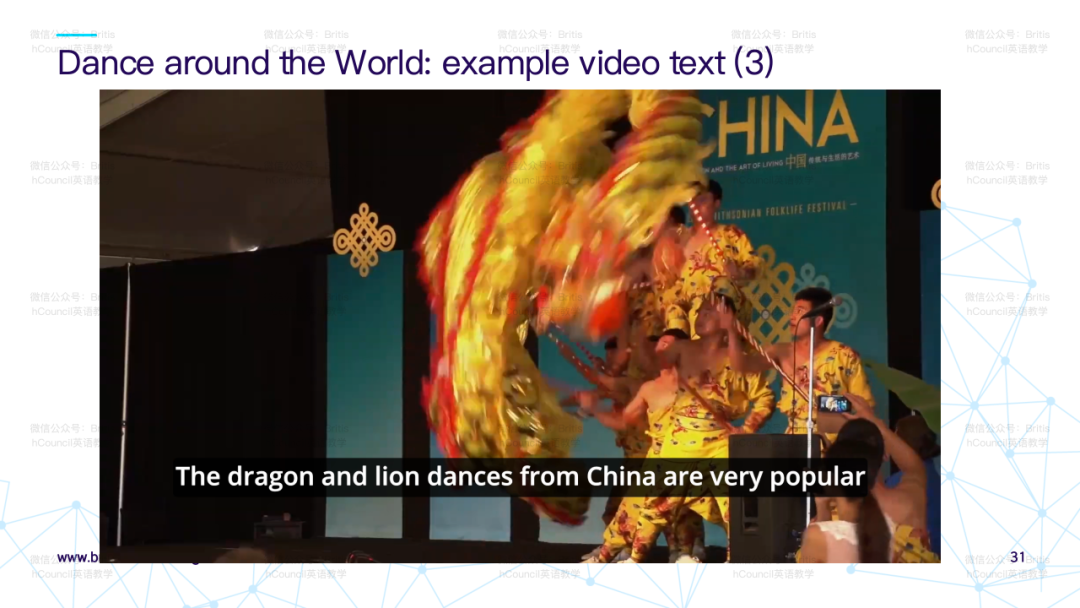
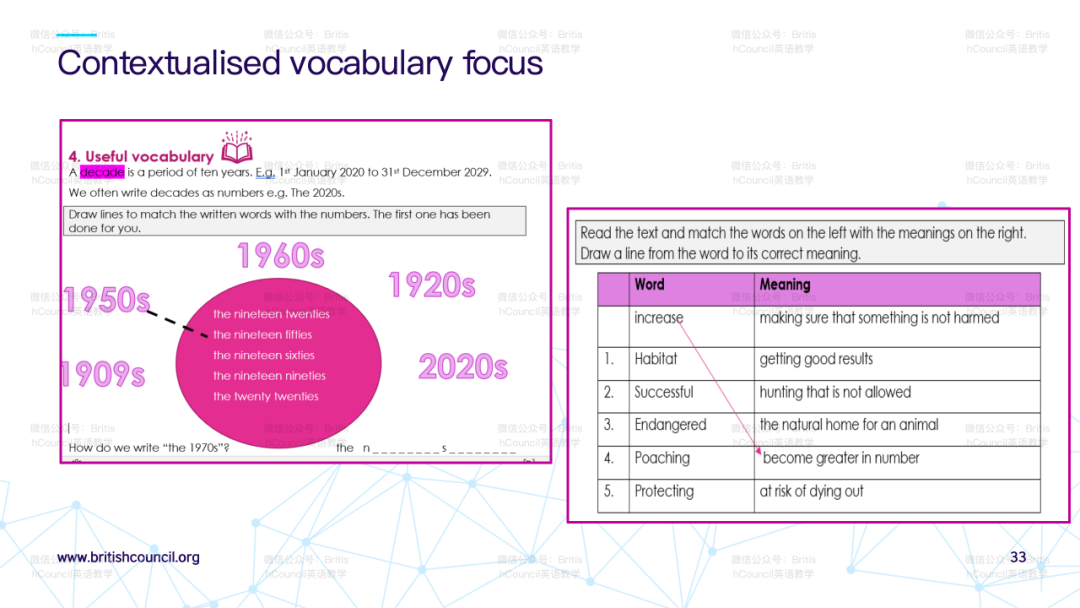
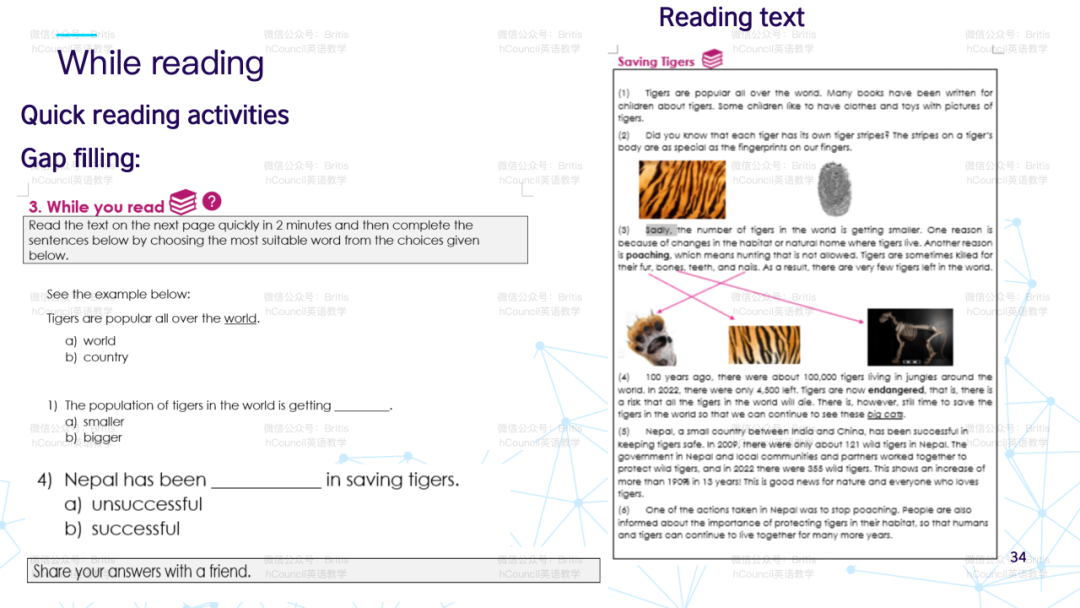
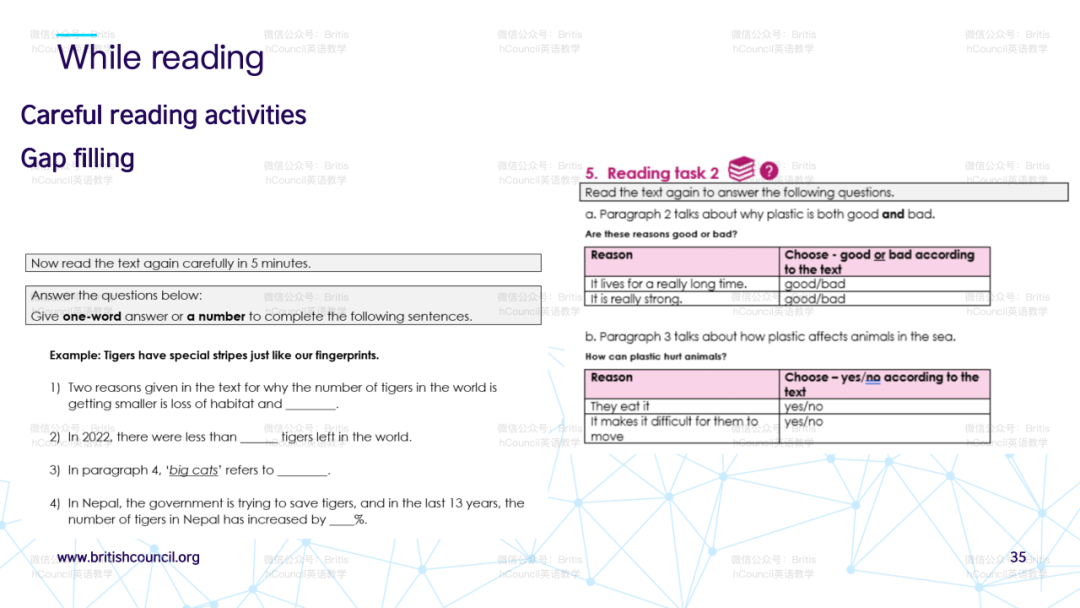
鉴于上述背景,项目团队开发了一套跨文化教学材料和资源包,侧重将语言学习与文化主题和内容相结合。这些材料与新课标中的两大主题相呼应——“人与社会”和“人与自然”——并探讨了与这些主题相关的不同国家文化元素。这些材料旨在通过让学生接触有关其他文化的视频、文本和图像来发展学习者的文化意识和全球视野,然后引导学生反思自己的文化和背景。这些材料的词汇量严格控制在新课标规定的词汇表内以匹配学生相对初级的英语水平;同时文本、视频和任务的设计强调实用性和易用性。这些材料在西南地区的教师中进行了试点,以直接获得他们的反馈和改进意见。教师对视频词汇解释和语言指导与文化内容之间的平衡给予了积极的反馈。
Key Points from the Presentation:
Introduction
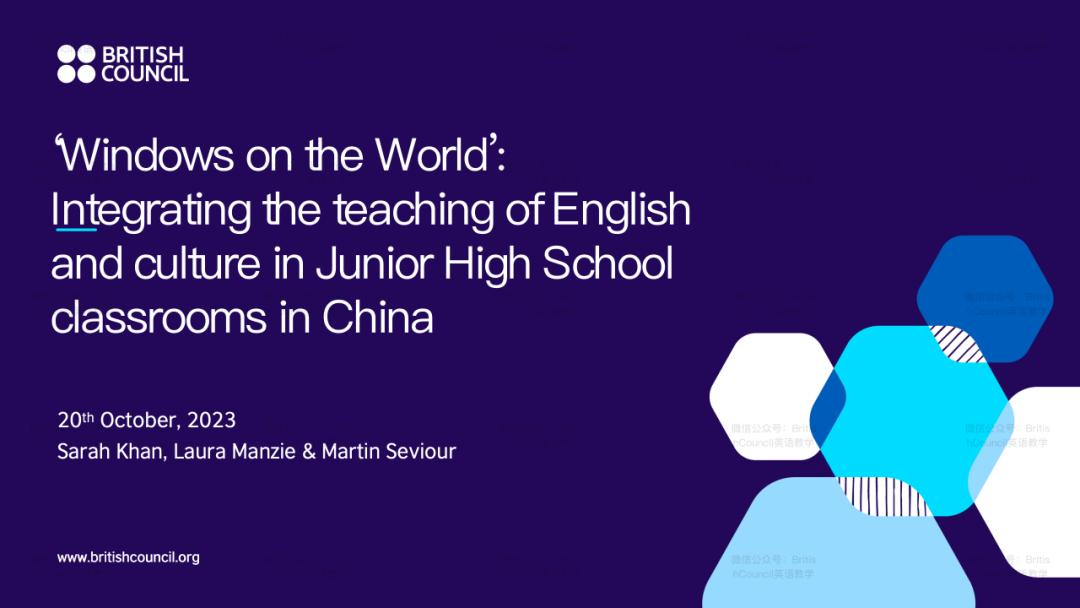
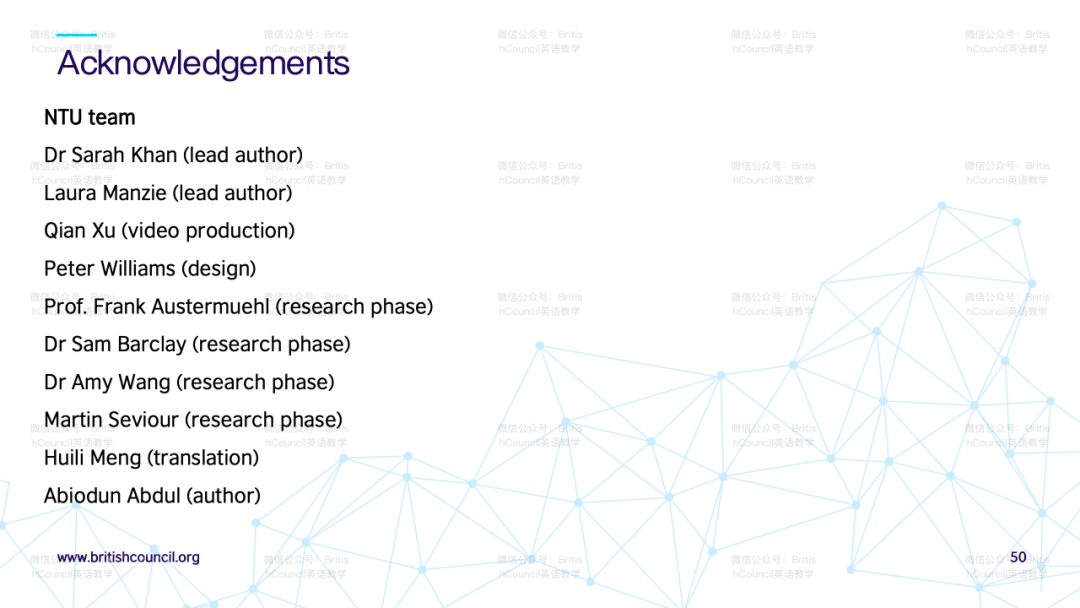
The talk titled "Cross-Cultural English Language Teaching Resource Development and Research" was delivered by three speakers - Dr. Sarah Khan, Laura Manzie and Martin Seviour. They represented a collaborative project team from two universities - Nottingham Trent University in the UK and Chongqing University in China.
The main focus of their project and presentation was on developing teaching resources and materials to integrate cross-cultural content into English language lessons. This was targeted specifically at junior high school students in less advantaged and rural areas of Southwest China, including Chongqing Municipality and Yunnan Province.
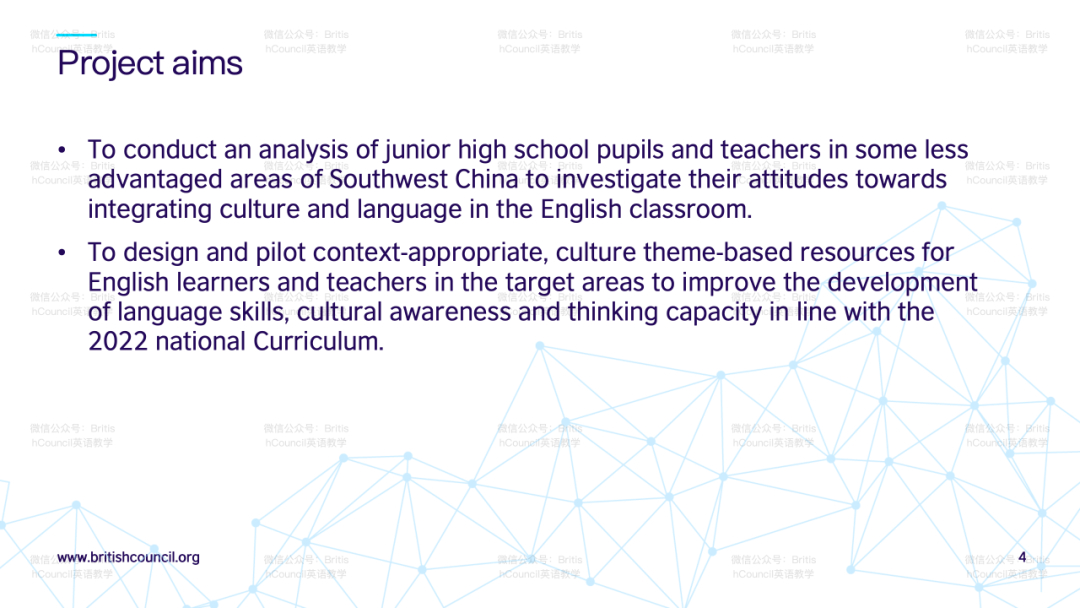
Overall, the project aimed to conduct research into attitudes of teachers and students towards incorporating cultural elements in English classes. It then sought to design and pilot context-appropriate, culture-themed resources to improve English proficiency and build cultural awareness and critical thinking skills. The development of these teaching materials was aligned to the requirements of China's 2022 national curriculum for English.
The project was initiated in 2021 through the support of the British Council in China. The collaboration brought together experts from both universities to leverage their combined experience in English language pedagogy, materials development and research.
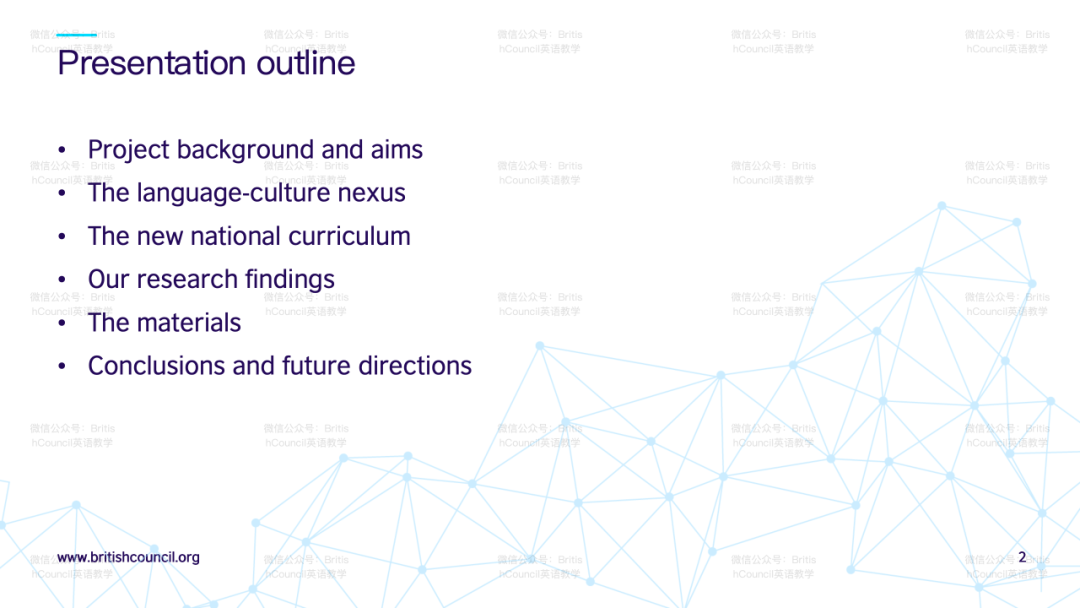
Overview of Project Background, Aims and Timeline
As outlined by the speakers, the project had two broad aims. The first was to carry out an investigative study through surveys of junior high school teachers and students in the targeted regions of Southwest China. The goal was to analyze their perspectives and attitudes on integrating cultural content and language learning in English lessons.
The second core aim was to utilize the findings from this research, along with inputs from project collaborators, to design teaching materials and resources for English learners and teachers. The materials developed were intended to be context-appropriate for classrooms in rural Southwest China. They focused on improving students' language skills, cultural awareness, and thinking capacity. Importantly, the content and activities aligned with the requirements of China's new national curriculum for English released in 2022.
In terms of timeline, the cross-university partnership between Nottingham Trent and Chongqing University was initiated in 2021. The first phase focused on investigative research through teacher and student surveys in the identified areas. This was followed by collaborative development of the teaching materials and resources based on the research insights.
The target regions for the project were selected schools across Chongqing Municipality and parts of Yunnan Province. These areas were chosen as they contained a number of less advantaged rural schools that could benefit from additional English teaching materials tailored to their regional context.
Key Perspectives from Literature Review on Language-Culture Nexus
The speakers briefly highlighted some key ideas that have shaped the debate around the relationship between language and culture within English as foreign language pedagogy.
They noted that the mainstream view through most of the 20th century was oriented towards teaching the target language (in this case English) together with the dominant cultures associated with it, namely British and American cultures. Textbooks and classroom materials therefore contained representations primarily drawn from these two cultures.
However, applied linguists in the 1980s and 90s such as Claire Kramsch challenged this approach. Byram introduced the theory of 'critical cultural awareness' that moved away from the pedagogical focus on native English speakers and their cultures. He emphasized that English had taken on the status of a global lingua franca that should enable intercultural communication and exchange rather than promote any single culture.
Related to this, the speakers touched upon Yashima's concept of an 'international posture' that motivates learners of English. Even learners with limited exposure to diverse cultures can posit an imagined global community that gives them a broader intercultural perspective and a positive orientation towards learning the language.
Highlights from China's 2022 National English Curriculum
The speakers explained how China's new national curriculum for English education, released in 2022, provided an important framework for their project. Some highlights:
The curriculum defines 'cultural awareness' as one of the four core competencies for English learning, underscoring its importance alongside more traditional skills like vocabulary and grammar.
It emphasizes that students should develop understanding of a global community, learn about diverse cultures and make comparisons. There is focus on building respect for cultural diversity.
In addition to cultural awareness, development of critical thinking skills and capacities is also accentuated.
The curriculum recommends integrating language and cultural learning through suggested themes around society, nature, science etc. It advocates teaching language and cultural knowledge in an integrated manner.
Research Findings on Teacher and Student Attitudes
The presenters provided a brief overview of some key findings that emerged from their surveys of Chinese junior high school teachers and students in Chongqing and Yunnan.
Teachers expressed broad positivity towards incorporating cultural elements into English classes but felt constrained by their own lack of knowledge about global cultures. They also highlighted the lack of context-relevant teaching resources and materials in this area.
Many teachers were concerned about motivating students for additional culture-focused content when the existing curriculum was already packed. But they recognized the need for such materials.
Students demonstrated positive orientation to learning English in the survey responses. They also showed interest in gaining knowledge about diverse world cultures.
The student survey found that most classrooms were equipped with technology access and tools needed for using audio-visual materials in class.
Topics of cultural interest identified by students included cross-cultural differences, history, lifestyle habits, food, customs and traditions.
Development of Context-Appropriate Teaching Materials
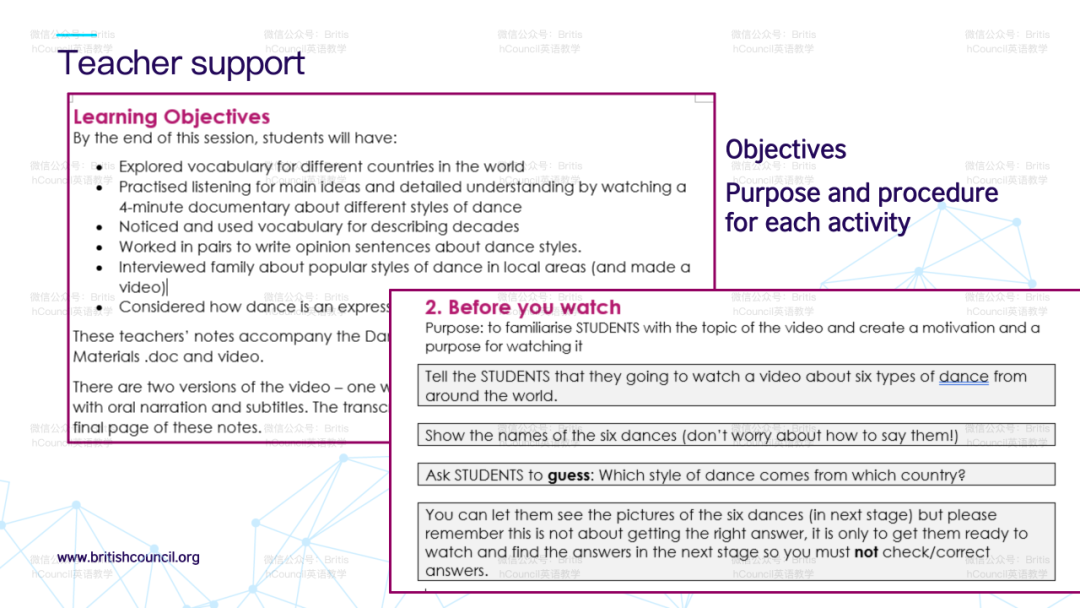
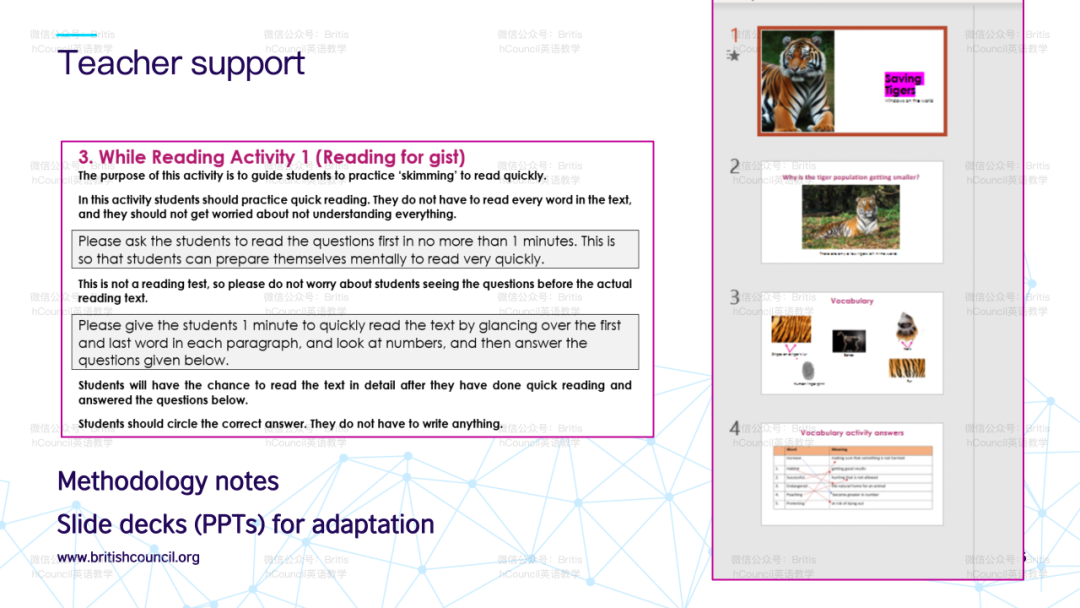
Based on the research inputs and alignment with national curriculum requirements, the project team developed a suite of teaching materials and resources focused on integrating language learning with cultural themes and content.
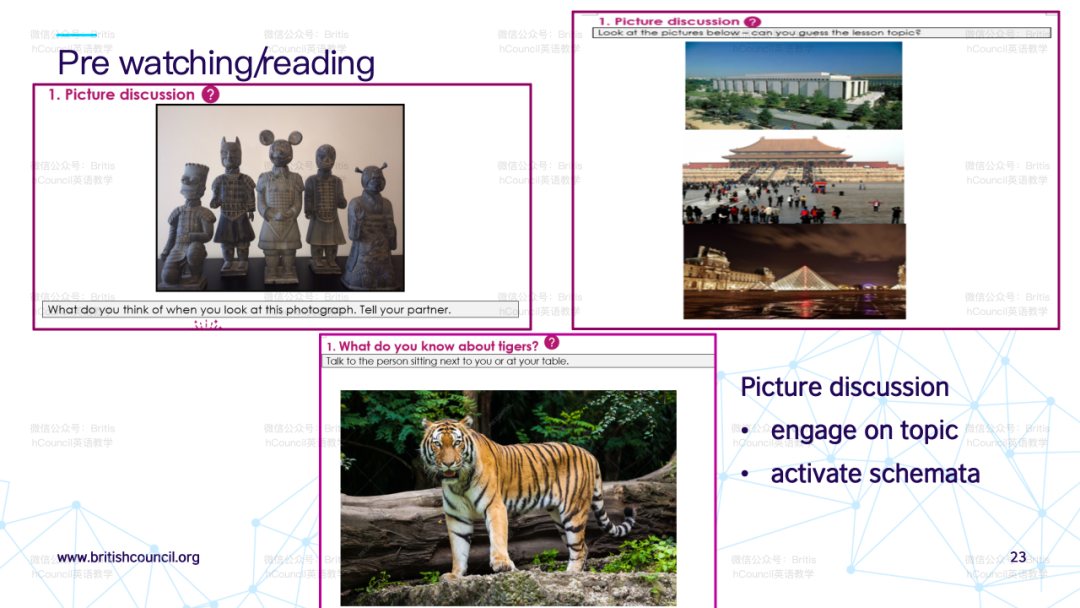
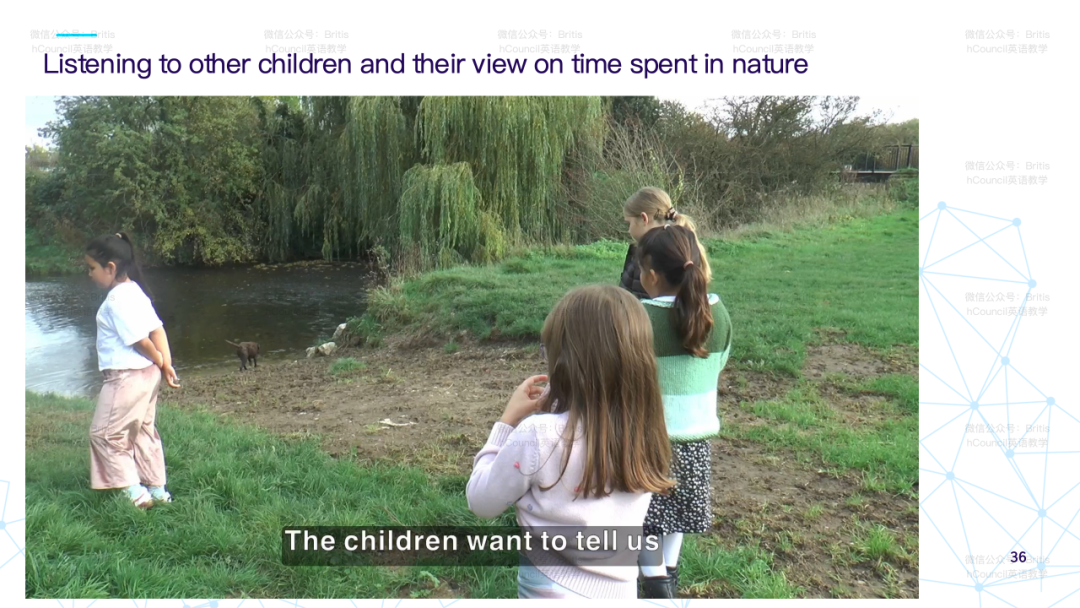
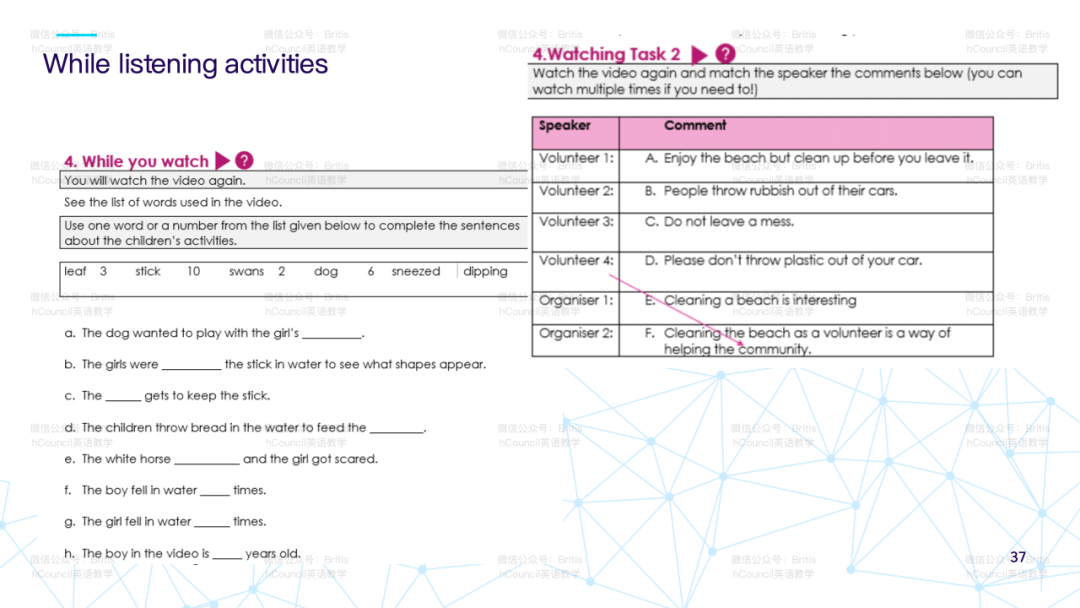
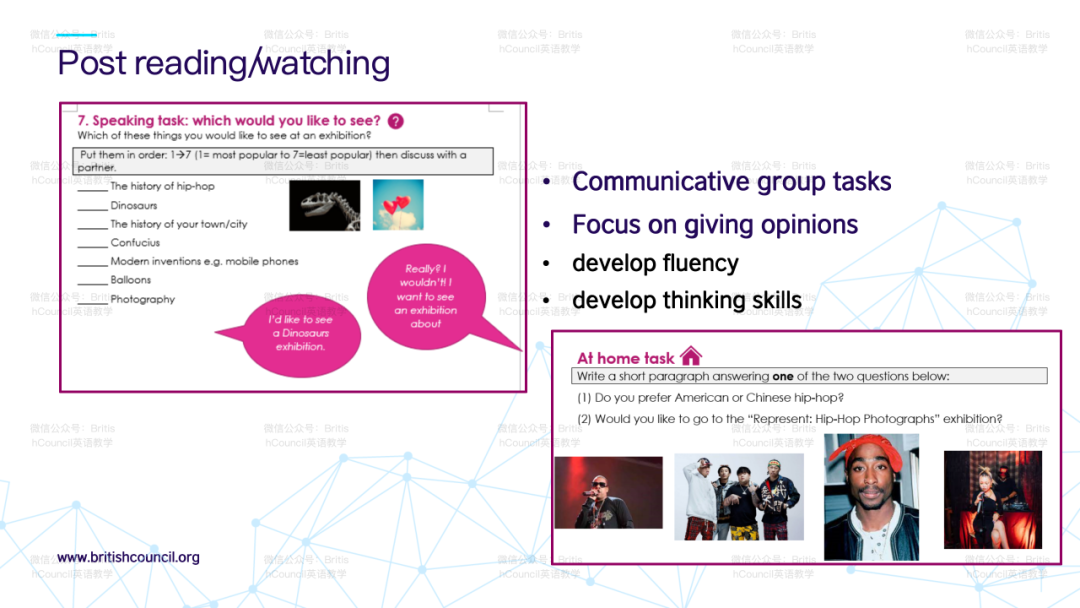
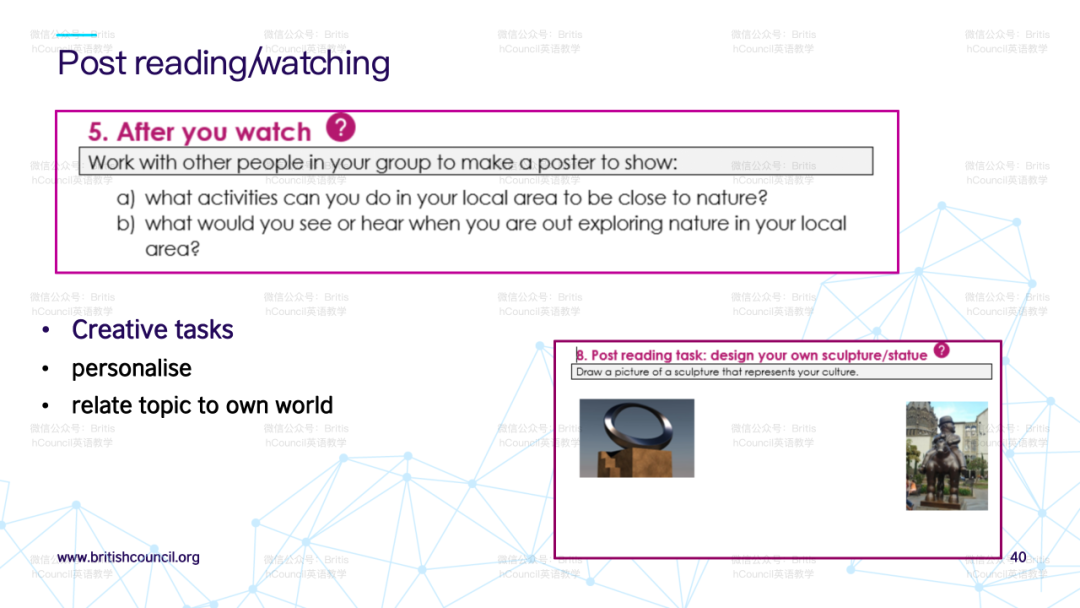
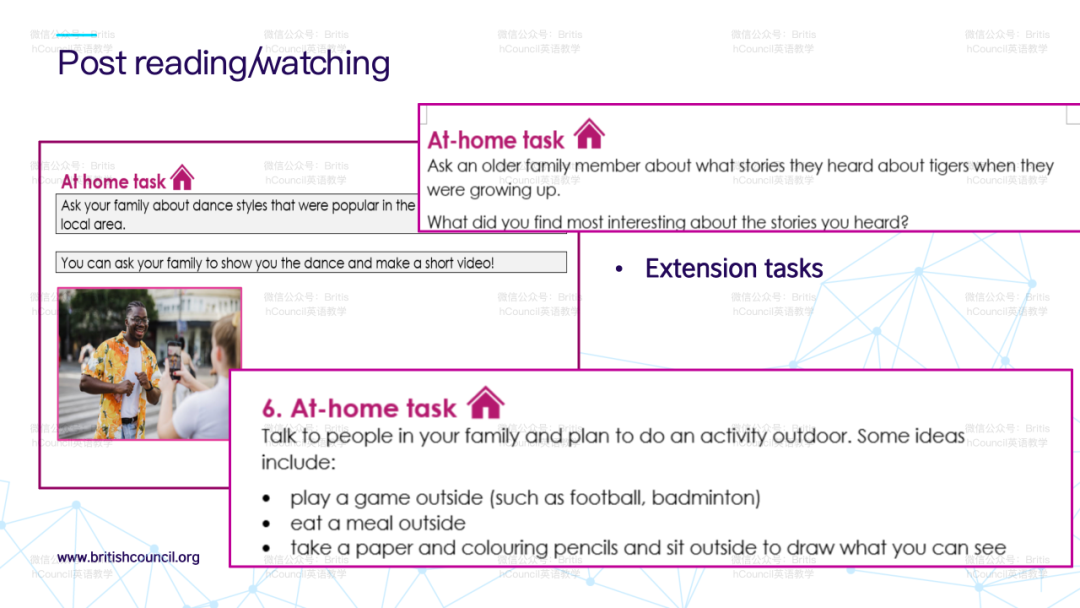
The materials were organized into two overarching themes that matched curriculum categories - People and Society, and People and Nature. Lessons explored elements of different country cultures relevant to these themes. They aimed to develop learners' cultural awareness and global perspectives by first exposing them to videos, texts and images on other cultures. Follow-up activities then guided students to reflect upon their own cultures and contexts.
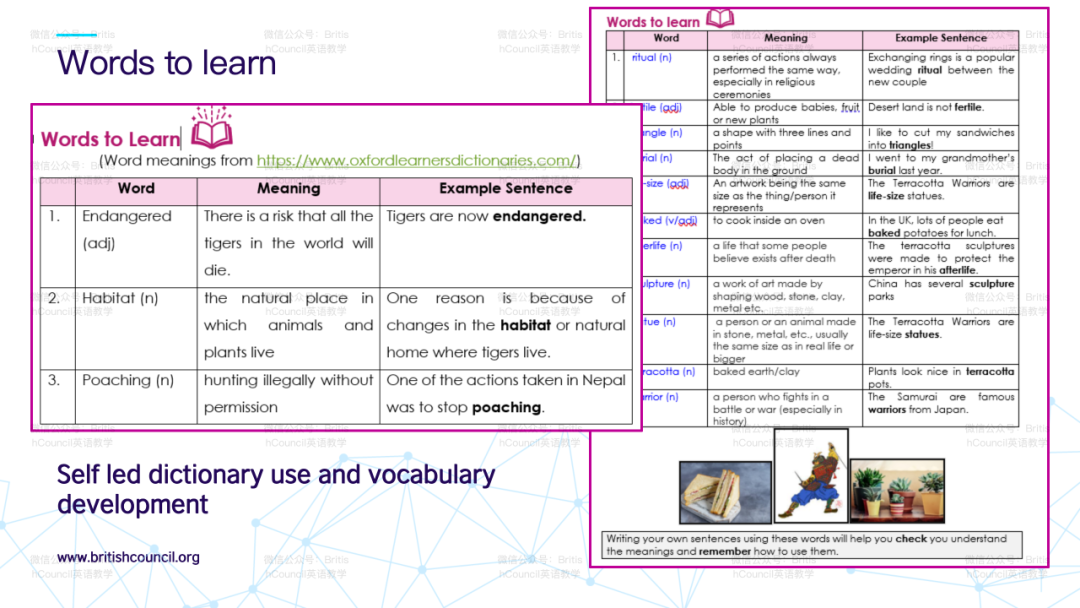
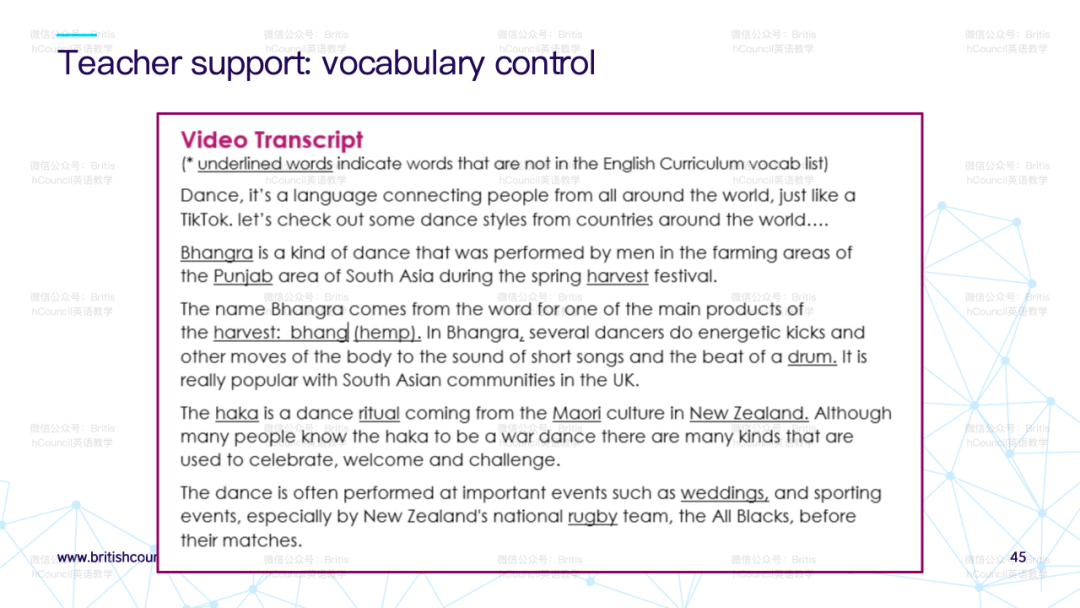
Great care was taken to control the vocabulary level in the materials to match the vocabulary lists prescribed in China's national curriculum. The texts, videos and tasks were designed to be accessible for students at relatively early stages of English proficiency.
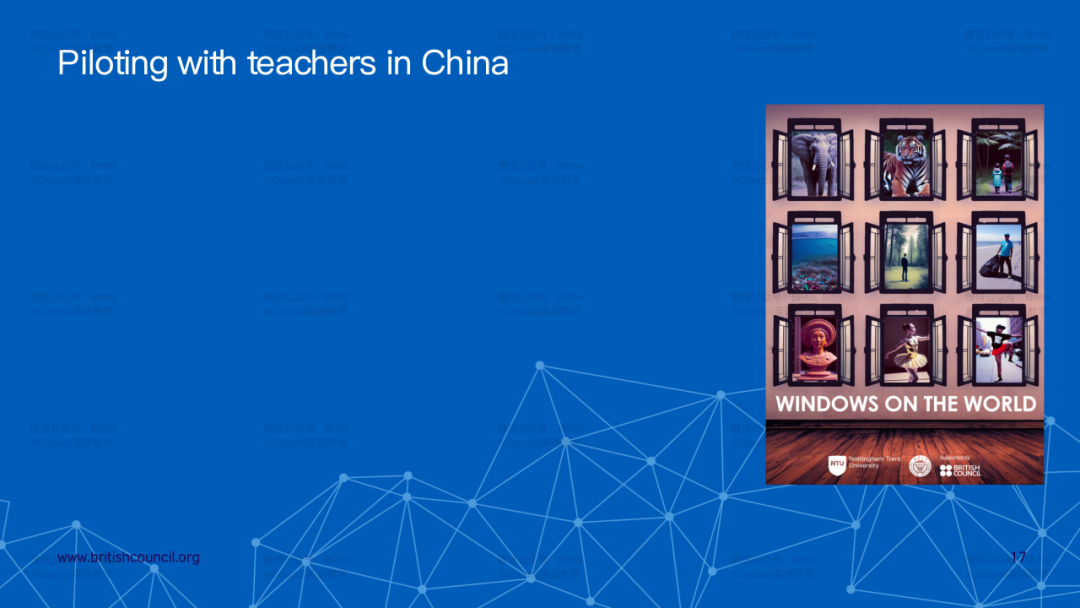
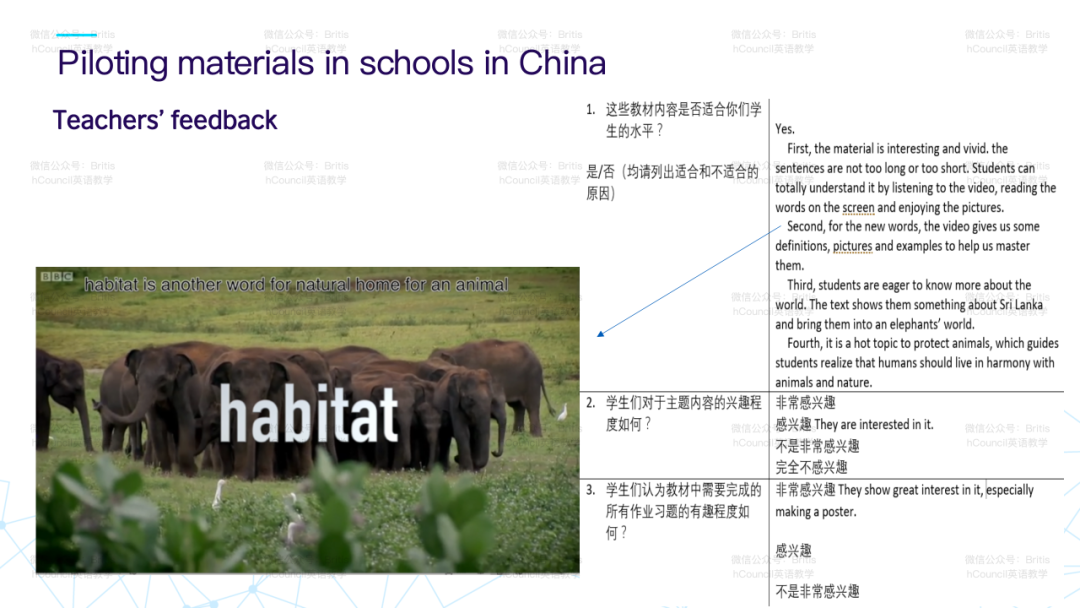
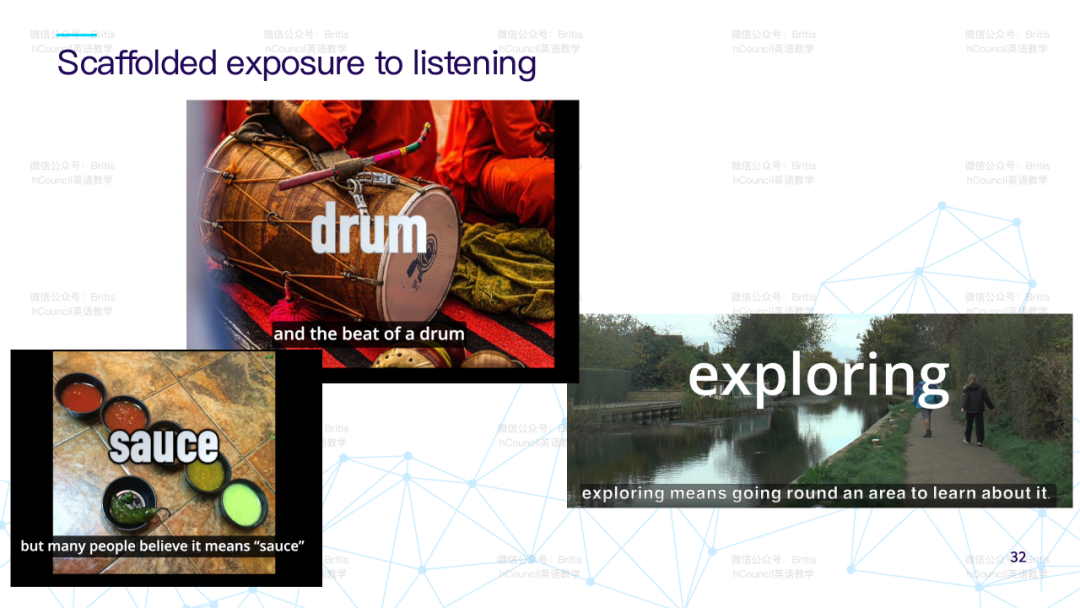
The materials were piloted with teachers in the target regions of Southwest China to get their direct feedback and inputs for further refinement. Teachers provided positive feedback on the video explanations of vocabulary and the balance between language instruction and cultural content.
问答环节小结
平衡语言技能教学和文化学习的策略
在演讲中,有听众询问如何平衡教材中的语言技能指导和文化内容教学。
对此,演讲者的建议是:
选择在一周中将特定的日子或课时专用于文化教学,而在其他时间更传统地进行语言课。
在常规语言课中加入关键的反思视角——让学生思考与主题相关的跨文化意识与态度。
繁重的教学任务可能会限制额外文化内容学习的时间,但可以将文化意识视角融入现有内容,通过讨论任务和反思课堂本身的多样性来实现。不同地区背景的学生可以交流观点,这有助于扩大他们的视野和认识。
学生可以用第一语言反思材料的可能性,这更易于处理新的文化概念。这可以成为英语讨论的基础。
获得更广阔的文化视角的途径
另一位听众询问对于从未走出过国门的英语教师,该如何提升文化教学能力。
演讲者强调了旅行可以提供宝贵的文化意识视角,但真正的文化理解源于识别不同文化之间的共享人类经验和联系。他们建议不要将文化仅仅看作国家和民族认同,不是非得出国才是跨文化,而应尝试关注因特定利益、活动或身份而结成的“小文化”。
他们指出,在中国,课堂中常包含不同地区背景的学生。教师可以从这些学生之间的交流和共同经验的识别入手,建立跨文化意识。
发展教师的文化意识的途径
针对如何发展教师自身文化意识的问题,演讲者提到本项目的研究报告内会有汇编的阅读清单与大家分享,以丰富教师在语言教学中整合跨文化学习的理解。该报告将在英国文化教育协会官网中提供下载。
Key Points from the Q&A:
Balancing Language and Cultural Learning
One audience member, noting the engaging integration of cultural content in the materials, asked for guidance on balancing explicit language instruction with the immersive approach demonstrated in the resources.
The speakers highlighted some strategies in response. One option was to dedicate specific days or class sessions in a week for the cultural materials, while focusing more traditional language lessons on other days. Another suggestion was to bring a critical reflection perspective into regular language lessons - getting students to think about cross-cultural attitudes or international connections related to the topic.
They noted that the reality of heavy curriculum requirements may limit time for additional lessons. But a cultural awareness angle could be incorporated into existing content via discussion tasks and reflection on diversity within the classroom itself. Students of varied regional backgrounds could exchange perspectives.
The presenters also raised the possibility of students reflecting on materials in their first language, which may be more accessible for processing new cultural concepts. This could then feed into English discussion.
Gaining Wider Cultural Perspectives
Another audience member asked the speakers to draw from their diverse international experiences to advise teachers without much exposure to other cultures.
The presenters emphasized that travel can provide valuable perspective, but real cultural understanding stems from identifying shared human experiences and connections across cultures. They suggested viewing culture not just in terms of countries and national identities, but also "small cultures" around particular interests, activities or identities that unite groups across borders.
Within China itself, they noted that classrooms often contain students from varied regional backgrounds. Teachers could build intercultural awareness starting from exchanges between these students and identifying common experiences.
Developing Teachers' Cultural Awareness
In response to a question on developing teachers' own cultural awareness, the presenters mentioned creating a recommended reading list citing scholarly references on culture in language education. Articles written by Chinese experts would also be valuable to provide local perspectives.
The compiled reading list will be shared with participants to enrich teacher's understanding of integrating intercultural learning in language teaching.
PPT分享
资料下载
本讲提到的研究报告将在完成后上传至
https://www.britishcouncil.cn/teach/ria-emada
中的第3项研究并提供免费下载,敬请关注
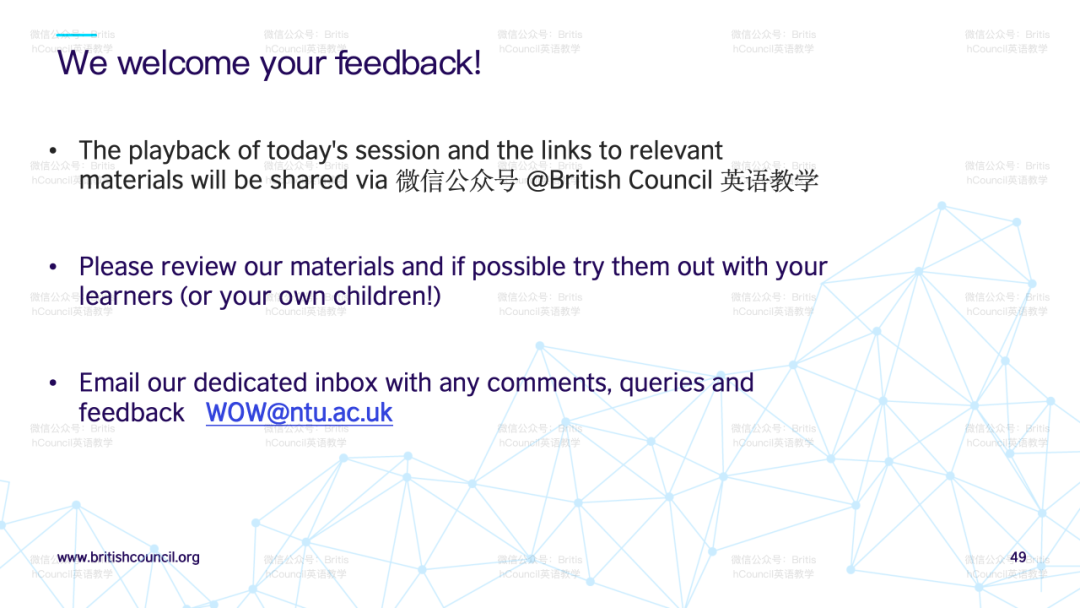
本项目的研究团队欢迎大家就项目相关事宜和反馈致信
WOW@ntu.ac.uk
 10个月宝宝每天需要喝多少奶粉?

